

Infrared saunas can often reduce arthritis pain and joint stiffness in the short term when used alongside your regular treatment plan, not instead of it. A 2025 review of sauna therapy in rheumatic disease and guidance from the Mayo Clinic both point to real, if modest, symptom relief. Anyone with heart disease, uncontrolled blood pressure, or heat intolerance should talk to a doctor before trying one, and options like an infrared sauna blanket make it easy to test the waters at home first.
TL;DR:
- Infrared sauna therapy provides modest, short-term pain and stiffness relief mainly through improved circulation, with benefits typically seen after several weeks of consistent use.
- Patients with cardiovascular issues, uncontrolled blood pressure, or heat intolerance should consult a doctor before use and start with brief, lower-temperature sessions at home.
- Infrared devices heat tissue directly at lower ambient temperatures than traditional saunas, making them better tolerated by those sensitive to heat or with cardiovascular concerns.
- Most studies suggest that infrared therapy works best with regular sessions over two to four weeks rather than a single treatment; it does not modify the underlying disease.
- Testing with low-cost options like infrared blankets before investing in a dedicated sauna helps determine if infrared heat effectively alleviates individual joint pain.
Table of Contents
- How Infrared Sauna Therapy Helps With Arthritis Pain
- How Is Infrared Different From a Traditional Sauna?
- Who Should Be Careful With Infrared Sauna Sessions?
- What Does a Safe Infrared Sauna Routine Look Like?
- Choosing a Home Infrared Setup You Can Trust
- Why the “Cure vs. Comfort” Confusion Hurts Arthritis Patients
- Bringing Infrared Heat Therapy Into Your Own Home
- Sources
- FAQ
How Infrared Sauna Therapy Helps With Arthritis Pain
Infrared heat works from the inside out. Rather than warming the air around you the way a traditional sauna does, infrared panels emit light energy that penetrates skin and soft tissue directly, warming muscles and joints a few centimeters below the surface. That direct absorption is what researchers believe drives the benefit for arthritis patients.
The mechanism comes down to three things: vasodilation, circulation, and stiffness reduction. Heat causes blood vessels to widen, and that expanded blood flow delivers oxygen and nutrients to inflamed tissue while helping flush out metabolic waste that builds up around aching joints. Healthline reports that people with rheumatoid arthritis who use infrared saunas often notice improved mobility and reduced pain, likely tied to this improved circulation rather than any change in the underlying disease process.
Here’s what the clinical evidence actually shows:
- A pilot study on patients with rheumatoid arthritis and ankylosing spondylitis found that whole-body infrared treatment reduced pain and stiffness during the treatment course, though benefits tended to fade once sessions stopped.
- Randomized trials of monochromatic infrared energy report measurable improvements in pain and function for knee osteoarthritis during short-term protocols.
- A broader systematic review of infrared and infrared-A therapy found consistent short-term drops in pain scores across osteoarthritis, fibromyalgia, and other musculoskeletal conditions, though study methods varied widely.
Pro Tip: Track your pain on a simple 0 to 10 scale before and after each session for two weeks. That small habit turns a vague impression into evidence you can actually compare over time.
Most of these studies used repeated sessions spread across two to four weeks rather than a single visit. Consistency, not a one time session, seems to be what produces measurable change. It’s worth being honest about the ceiling here too: none of this research suggests infrared heat modifies the disease itself. The Mayo Clinic is direct about this, noting that while studies show some proof of benefit for arthritis, the trials remain small and larger studies are still needed. Think of infrared therapy as a tool for symptom management, similar to how a heating pad helps a flare without touching the underlying condition.
How Is Infrared Different From a Traditional Sauna?
Infrared devices heat your body directly instead of heating the room you’re sitting in, which is the main reason arthritis patients tend to tolerate them better than a traditional dry sauna or steam room.
A conventional sauna raises ambient air temperature to 150 to 195 degrees Fahrenheit, forcing your body to absorb heat from the surrounding environment. Infrared cabins typically run between 120 and 140 degrees Fahrenheit at the air level, yet deliver comparable or deeper tissue warming because the light energy penetrates directly into muscle and joint tissue. That lower ambient temperature matters enormously if you have heat sensitivity, cardiovascular concerns, or simply find a traditional sauna hard to sit through.
You’ll typically run into three infrared wavelength types and a few device formats:
- Far-infrared penetrates deepest and is the most common wavelength in home cabins and blankets.
- Mid-infrared targets muscle tissue and is often used for pain and inflammation.
- Near-infrared works closest to the skin’s surface and is associated with skin health benefits.
- Device formats range from full cabins to portable blankets to pop-up tents, each offering a different balance of heat intensity, cost, and convenience.
Who Should Be Careful With Infrared Sauna Sessions?
Infrared heat is generally well tolerated, but it’s still a cardiovascular stressor. Your heart rate rises and blood vessels dilate, which is exactly the mechanism that helps sore joints but also the reason certain health conditions call for caution.
Common, mild side effects include lightheadedness, mild dehydration, and skin flushing, all of which usually resolve once you cool down and rehydrate. Rare but more serious risks include a sharp drop in blood pressure, fainting, and skin burns from sitting too close to a heating panel.
Certain conditions warrant a conversation with a doctor before you ever step into a cabin:
- Unstable heart disease or a recent heart attack
- Uncontrolled high blood pressure
- A history of fainting or syncope episodes
- Pregnancy, where data on heat exposure remains limited
- Any condition involving medications that affect blood pressure or hydration status
Cleveland Clinic specifically recommends clinical consultation for anyone with cardiovascular disease before starting sauna use of any kind. If you’re on blood pressure medication, diuretics, or anything that affects fluid balance, ask your prescriber how heat exposure interacts with your regimen.
Pro Tip: Keep a glass of water within arm’s reach during every session, and set a timer. If you feel dizzy, nauseated, or unusually short of breath, step out immediately, sit down, and sip water. Those symptoms are your body’s clearest signal to stop, not push through.
What Does a Safe Infrared Sauna Routine Look Like?
A conservative starting routine gives your body time to adjust while letting you judge whether infrared heat is actually helping your joints.
- Start with two to three sessions per week rather than daily use.
- Keep early sessions to 10 to 15 minutes, working up to 20 minutes only if you tolerate it well.
- Set the cabin or blanket to a lower comfortable temperature at first. There’s no need to chase the highest setting.
- Rehydrate with water before and after every session, and skip alcohol beforehand.
- Pair sessions with five to ten minutes of gentle stretching or range-of-motion movement once your muscles are warm, since infrared works well as an adjunct to light movement rather than as a standalone fix.
A few practical notes depending on your setup:
- Blankets warm you faster since fabric sits directly against skin, so start with shorter sessions than you would in a cabin.
- Tents and cabins take longer to reach target temperature but allow more even, whole-body heating.
- Give any new routine two to three weeks of consistent use before judging whether it’s worth continuing, mirroring the treatment windows used in clinical studies.
Choosing a Home Infrared Setup You Can Trust
Comfortable, well-informed choices matter as much as the heat itself. An education-first approach centers on clear buying guides and a curated product range built to help homeowners understand what they’re purchasing before they commit, rather than pushing the biggest box available.
For arthritis patients specifically, the right starting point usually depends on how committed you are to a daily routine versus testing the concept first:
- The Premium Infrared Sauna Blanket suits anyone who wants a low-cost, low-barrier way to see how their joints respond before investing further.
- The Fjordheim Solo Infrared Sauna fits a single committed user who wants a dedicated cabin and more consistent, sustained heating session after session.
- The Eldvik 2-Person Outdoor Infrared Sauna works for households where more than one person, maybe a partner managing their own joint pain, wants shared access.
Whichever option you’re drawn to, a clinician-cleared trial period before a larger purchase is still the most sensible way to confirm infrared heat actually helps your specific joints.
Why the “Cure vs. Comfort” Confusion Hurts Arthritis Patients
The biggest disservice done to arthritis patients researching infrared saunas is letting them believe it’s a treatment for the disease rather than a tool for the symptoms. Those are different claims, and conflating them sets people up for disappointment when their joint damage hasn’t reversed after a month of sessions.
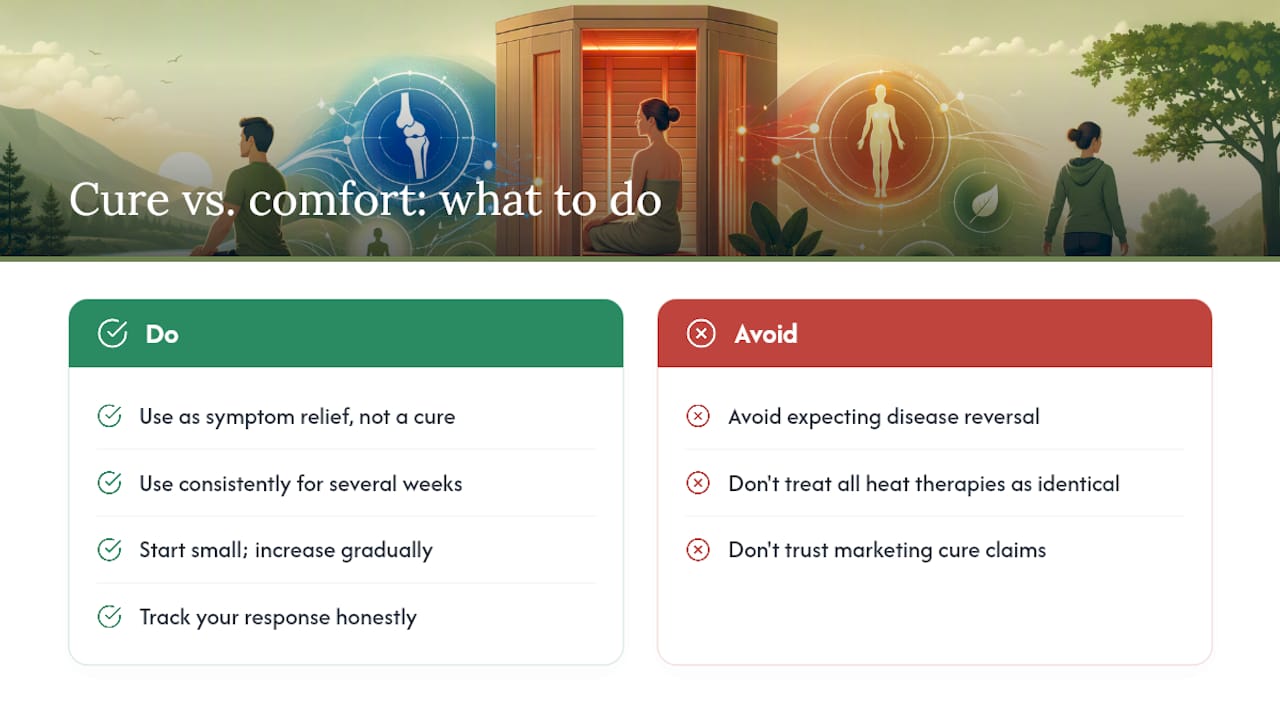
What the research actually supports is narrower and, frankly, more useful: consistent heat exposure over several weeks tends to ease pain and stiffness while a person is actively using it. That’s not nothing. If you’re managing a chronic condition, a reliable tool that takes the edge off pain several times a week has real value, even if it never modifies the underlying disease.
Where conventional advice falls short is in treating every heat therapy the same way. A traditional sauna, a heating pad, and an infrared cabin don’t behave identically in the body, and infrared’s ability to work at lower air temperatures is precisely why it’s worth trying first if heat intolerance has kept you away from saunas before. Start small, track your response honestly, and let your own data, not marketing promises, decide whether it earns a permanent place in your routine.
— Phil
Bringing Infrared Heat Therapy Into Your Own Home
Tranquilora gives you a straightforward path to test infrared therapy without booking spa appointments or committing to equipment you haven’t tried living with. Unlike a one-off spa visit, a home setup lets you build the consistency that clinical protocols actually rely on, using it on your own schedule as often as your joints need it.

If you’re just starting to explore whether infrared heat helps your arthritis, the Premium Infrared Sauna Blanket is the lowest-commitment way to find out. Ready for a dedicated setup instead? The Fjordheim Solo Infrared Sauna offers consistent, sustained heat for one person, while the Eldvik 2-Person Outdoor Infrared Sauna works well if you’re sharing the routine with a partner or family member. Browse the full infrared sauna collection to compare sizing and features side by side.
Get medical clearance first if you live with cardiovascular disease, uncontrolled blood pressure, or any condition flagged earlier in this guide. Once you’re cleared, choosing the right home setup is simply a matter of matching the product to how you actually plan to use it.

This article is general information, not a substitute for advice from a qualified doctor. Consult a qualified healthcare professional about your own circumstances before acting on anything here.
Sources
- Infrared Sauna for Rheumatoid Arthritis: Benefits and Risks — Healthline
- Sauna therapy in rheumatic diseases — PubMed (2025 review)
- Do infrared saunas have any health benefits? — Mayo Clinic
- Therapeutic Effects of Monochromatic Infrared Energy Therapy — PubMed
FAQ
Is an infrared sauna good for arthritis?
Yes, for many people it offers short-term relief from pain and stiffness when used alongside standard treatment, though it doesn’t reverse joint damage or replace prescribed medication.
What is the fastest way to relieve arthritis pain?
Gentle movement, warm compresses, and anti-inflammatory medication tend to offer the quickest relief, while infrared heat therapy usually needs a few sessions over one to two weeks before benefits become noticeable.
What foods should I avoid if I have arthritis?
Many people with arthritis find that processed foods, added sugar, and fried foods high in trans fats worsen inflammation and flares, though individual triggers vary and are worth tracking with a doctor or dietitian.
How do you stop osteoarthritis flare-ups?
Consistent low-impact movement, weight management, joint protection during daily tasks, and heat or cold therapy for acute pain are the most commonly recommended strategies for reducing flare frequency.
Is cold therapy good for arthritis?
Cold therapy works well for acute swelling and sharp flare pain, while heat therapy, including infrared, tends to suit chronic stiffness better. Many people rotate between both depending on the symptom.