

Sauna first, cold plunge second. A practical standard routine is 2 to 3 rounds of 10 to 15 minute sauna sessions paired with 1 to 3 minute cold plunges, finishing on cold. Aim for a weekly target of roughly 57 minutes of heat and 11 minutes of cold exposure, split across 3 to 4 sessions rather than crammed into one.
TL;DR:
- Repeated sauna sessions at 150 to 170°F for 10 to 15 minutes improve cardiovascular health through vasodilation, with weekly totals around 57 minutes of heat.
- Contrast therapy, combining sauna and cold plunges, induces beneficial autonomic nervous system shifts, including parasympathetic activation and alertness boosts.
- Individuals with unstable heart conditions, uncontrolled blood pressure, or syncope history should avoid or consult a doctor before trying contrast routines due to cardiovascular stress.
- Cold plunges of 1 to 3 minutes at around 50°F enhance alertness and metabolic activation, especially when the routine finishes on cold, but require careful hydration and safety precautions.
- Building tolerance gradually over 4 to 6 weeks, with 3 to 4 weekly sessions, helps prevent discomfort and allows safe adaptation to heat and cold exposure.
Table of Contents
- What Are the Benefits of a Sauna and Cold Plunge Routine?
- Who Should Avoid Sauna and Cold Plunge Combinations?
- How Do You Structure a Sauna and Cold Plunge Session?
- How Do You Build Up Your Routine Over Time?
- What Equipment Do You Need for a Home Contrast Routine?
- What Mistakes Derail a Sauna and Cold Plunge Routine?
- Ready to Build Your Own Contrast Therapy Setup?
- Sources
- FAQ
What Are the Benefits of a Sauna and Cold Plunge Routine?
The strongest evidence sits with heat exposure alone. Repeated sauna bathing is linked to improved cardiovascular function and vascular health across both population studies and controlled trials, largely through heat shock proteins and repeated vasodilation that trains blood vessels to relax and constrict more efficiently. Add cold water, and you get a second physiological lever: rapid vasoconstriction that pushes blood back toward your core, plus a norepinephrine surge tied to alertness and mood.
Contrast protocols, meaning sauna followed by cold, also shift your autonomic nervous system. One study measured a drop in sympathetic (fight-or-flight) markers immediately after sauna exposure, with parasympathetic activity climbing 30 minutes later, a pattern consistent with the calm, settled feeling many people report after a full session. That autonomic swing is also part of the rationale for going heat first: it primes the nervous system for the sharper contrast that cold delivers next.
For athletes and active people, contrast therapy has a specific, well-documented use case. A meta-analysis found that alternating hot and cold immersion reduces delayed-onset muscle soreness compared with passive rest, though it isn’t always more effective than cold immersion by itself.
What the research supports, and what it doesn’t yet:
- Strong evidence: repeated heat exposure and cardiovascular/vascular benefits, largely from Finnish sauna studies
- Moderate evidence: contrast therapy reducing post-exercise soreness versus rest alone
- Emerging evidence: autonomic shifts (HRV, sympathetic/parasympathetic balance) from combined protocols
- Limited or mixed evidence: long-term metabolic claims and outcomes specific to combined sauna-cold routines in the general population
A controlled study of repeated sauna and cold-water cycles found modest changes in blood pressure and heart rate across cycles, with effects varying by sex and study design. That’s a useful reminder that contrast therapy is a physiological stressor, not a neutral relaxation ritual, and it should be treated with the same respect you’d give a hard workout.
Who Should Avoid Sauna and Cold Plunge Combinations?
Contrast therapy asks a lot of your cardiovascular system in a short window. Heat causes your blood vessels to widen and your heart rate to climb; cold does the opposite almost instantly. That swing is exactly why certain health conditions call for caution or outright avoidance.
Skip contrast therapy, or check with a doctor first, if you have:
- Unstable cardiac conditions or a recent heart attack
- Severe aortic stenosis or other significant valve disease
- A history of fainting or syncope, especially in heat or cold
- Uncontrolled high blood pressure
- Pregnancy, uncontrolled diabetes, or any condition affecting temperature regulation
Hydration matters more here than in a typical workout. Early physiology research on combined heat and cold exposure found transient shifts in body fluid and plasma volume after back-to-back sessions, which is one reason clinical guidance recommends drinking water with electrolytes before and after, and avoiding alcohol around sessions entirely. Alcohol amplifies the blood pressure drop that cold exposure already causes, which raises the odds of dizziness or fainting.
Pro Tip: Keep a simple water or air thermometer near your sauna and plunge, and set a phone timer for every round. Guessing at temperature or duration is one of the easiest ways to accidentally push past what your body is ready for.
Practical safety habits worth building in from day one: never plunge alone if you’re new to cold exposure, exit immediately if you feel light-headed or your vision narrows, and give yourself a full rest interval seated and dry between rounds before deciding whether to continue.
How Do You Structure a Sauna and Cold Plunge Session?
The order matters. Heat first opens blood vessels and relaxes muscles; cold second closes them back down and delivers the alertness and mood lift most people are chasing. Reversing the order, cold before heat, doesn’t carry the same evidence base and can leave you shivering through a sauna session instead of settling into it.
Here’s how the protocol scales as your tolerance builds:
- Beginner: 10 to 15 minutes in a traditional sauna at 150 to 170°F (or 20 to 25 minutes in an infrared sauna at 120 to 130°F), followed by 30 to 90 seconds in cold water at 50 to 59°F. One to 2 rounds, 2 to 3 times per week.
- Intermediate: Same heat range, cold exposure extended to 1 to 3 minutes. 2 to 3 rounds, 3 to 4 times per week.
- Advanced: Sauna sessions extended toward 20 minutes, cold plunges pushed to 2 to 4 minutes at the colder end of the range (around 50°F). 3 rounds, 4 to 5 times per week, tracked against the weekly heat and cold totals below.
A standard intermediate session, minute by minute, looks like this:
- Minutes 0 to 12: Sauna at 160°F
- Minutes 12 to 14: Cold plunge at 55°F
- Minutes 14 to 17: Rest, seated, dry off, rehydrate
- Minutes 17 to 29: Sauna, second round
- Minutes 29 to 31: Cold plunge, second round
- Minutes 31 to 34: Rest
- Minutes 34 to 46: Sauna, third round (advanced only)
- Minutes 46 to 49: Final cold plunge, finish cold
Finishing cold tends to sustain norepinephrine and metabolic activation for hours afterward, which is why most morning or midday sessions end on cold rather than heat. If your routine is closer to your bedtime, an evening variant that finishes on a shorter, final sauna round instead of cold can support the parasympathetic wind-down you want before sleep. Neither order is wrong; it depends on what the session is for.
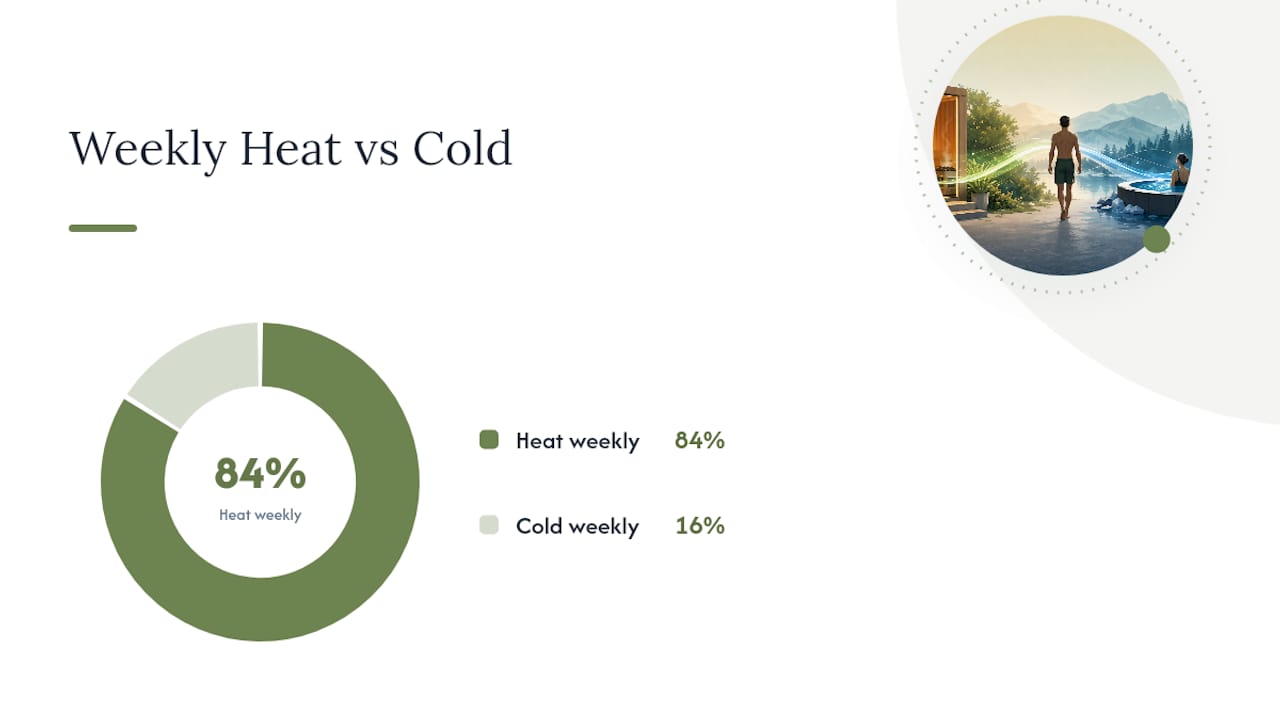
Across a week, three sessions like the intermediate example above land you close to the ~57 minute heat and ~11 minute cold benchmark without needing to overthink the math daily.
How Do You Build Up Your Routine Over Time?
Tolerance to both heat and cold builds gradually, and rushing it is the single fastest way to end a good routine with a bad experience. A 4 to 6 week progression gives your cardiovascular system time to adapt without constant discomfort.
- Weeks 1 to 2: 2 sessions per week, 1 round each, sauna 10 minutes, cold plunge 30 to 45 seconds. Focus on comfort with the transition itself, not intensity.
- Weeks 3 to 4: 3 sessions per week, 2 rounds each, sauna 12 to 15 minutes, cold plunge 60 to 90 seconds. This is where most people start feeling the routine become familiar rather than effortful.
- Weeks 5 to 6: 3 to 4 sessions per week, 2 to 3 rounds, sauna up to 15 to 20 minutes, cold plunge 90 seconds to 2 minutes.
A reasonable rule of thumb is to roughly double your cold exposure time every 2 to 3 weeks, watching for early shivering as your signal to hold steady rather than push further. Track cumulative weekly minutes of heat and cold rather than fixating on any single session, since consistency across the week is what the research benchmarks are built around.
One scheduling detail worth knowing if muscle growth is a goal: cold exposure immediately after resistance training can blunt the anabolic signaling your body uses to build muscle. If hypertrophy is the priority, separate cold plunges from lifting sessions by several hours, or shift contrast therapy to a rest day. For general recovery and stress relief, this timing concern matters far less. A closer look at post-workout sauna timing can help you decide where contrast therapy fits around training.
What Equipment Do You Need for a Home Contrast Routine?
The core choice on the heat side is traditional versus infrared sauna. Traditional Finnish saunas run hotter (150 to 195°F) and carry the deepest epidemiological data on cardiovascular outcomes. Infrared saunas heat your body directly at lower air temperatures, generally 120 to 140°F, which some people with blood pressure sensitivities find more comfortable, though the research base behind infrared specifically is thinner than for traditional sauna. Either works for a contrast routine; the right comfortable sauna temperature is the one you can hold for your full session without white-knuckling it.
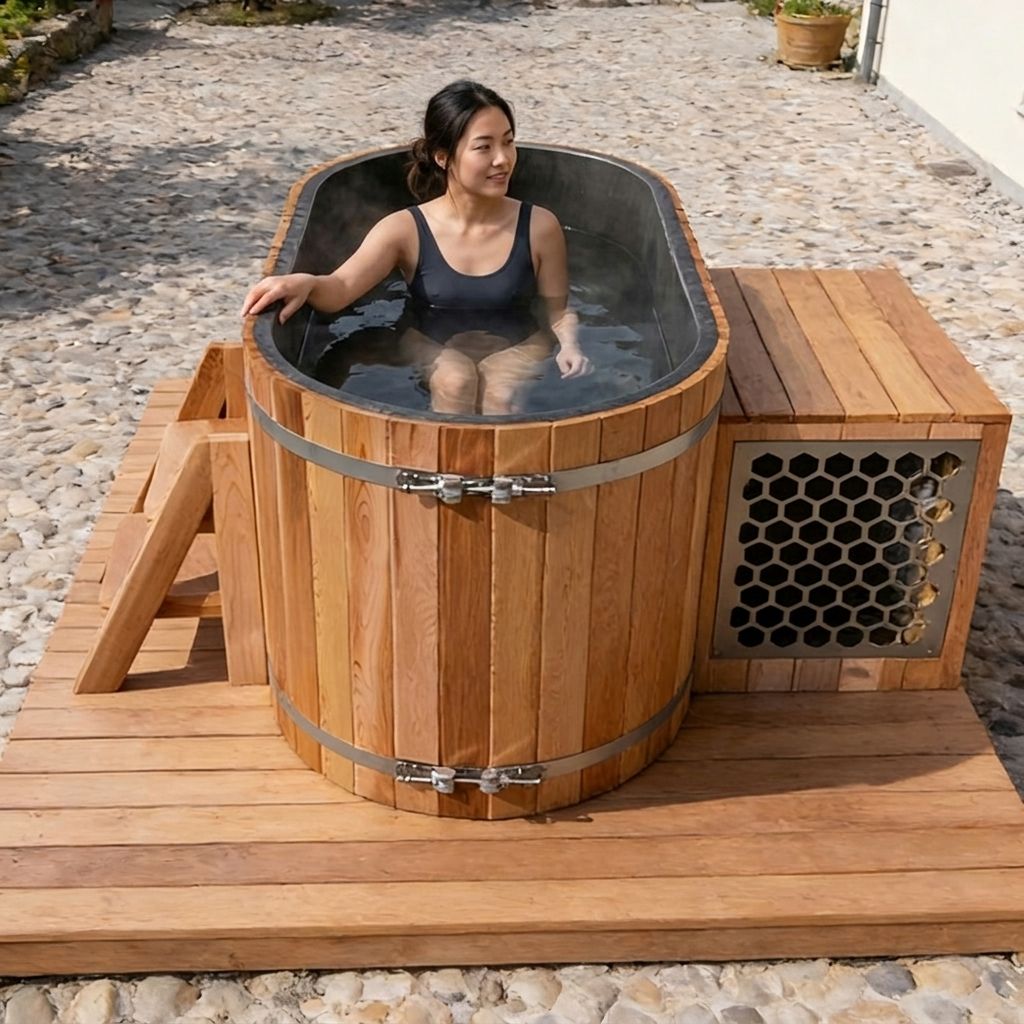
On the cold side, home options range widely. Dedicated cold plunge tubs with built-in chillers hold a steady temperature automatically, which removes the guesswork of adding ice bag after ice bag. Stock-tank builds and bathtub-with-ice setups work too, but temperature swings more and requires more manual monitoring.
- Water thermometer for the plunge, air thermometer for the sauna
- A visible timer for every round, not a mental countdown
- A basic maintenance checklist: water treatment for the plunge, ventilation checks for the sauna
- A licensed electrician or installer for any hardwired sauna heater or built-in chiller unit
Pro Tip: If you’re testing whether contrast therapy fits your routine before committing to a full setup, a portable sauna paired with a simple cold plunge lets you try the protocol without a permanent installation.
What Mistakes Derail a Sauna and Cold Plunge Routine?
The most common misstep is reversing the order: starting cold, then trying to warm up in the sauna. It fights your body’s natural response and skips the vasodilation that makes the cold plunge feel purposeful rather than just uncomfortable.
Progressing too fast is a close second. Jumping from 30 seconds of cold straight to 3 minutes in week two overshoots what most people’s cardiovascular systems have adapted to, and it’s a common reason people quit the routine entirely after one rough session.
Quick fixes for common scenarios:
- Traveling: A hotel gym sauna plus a cold shower finish approximates the pattern, even without a dedicated plunge.
- No sauna access: A hot shower for 10 minutes followed by 30 seconds of cold water is a reasonable substitute, though it won’t match a true sauna’s core temperature increase.
- Post-workout timing: Save cold immersion for after cardio or on rest days if hypertrophy is the goal; it’s less of a concern after endurance training.
Inconsistent frequency undermines the weekly totals more than any single skipped session does. One long session on a Sunday doesn’t replace three shorter ones spread through the week.
Ready to Build Your Own Contrast Therapy Setup?
Reading about weekly targets and progression plans is one thing. Having reliable equipment that holds its temperature session after session is what actually makes a routine stick. An education-first approach to home wellness equipment means the goal here is helping you understand the protocol before ever pointing you toward a product.
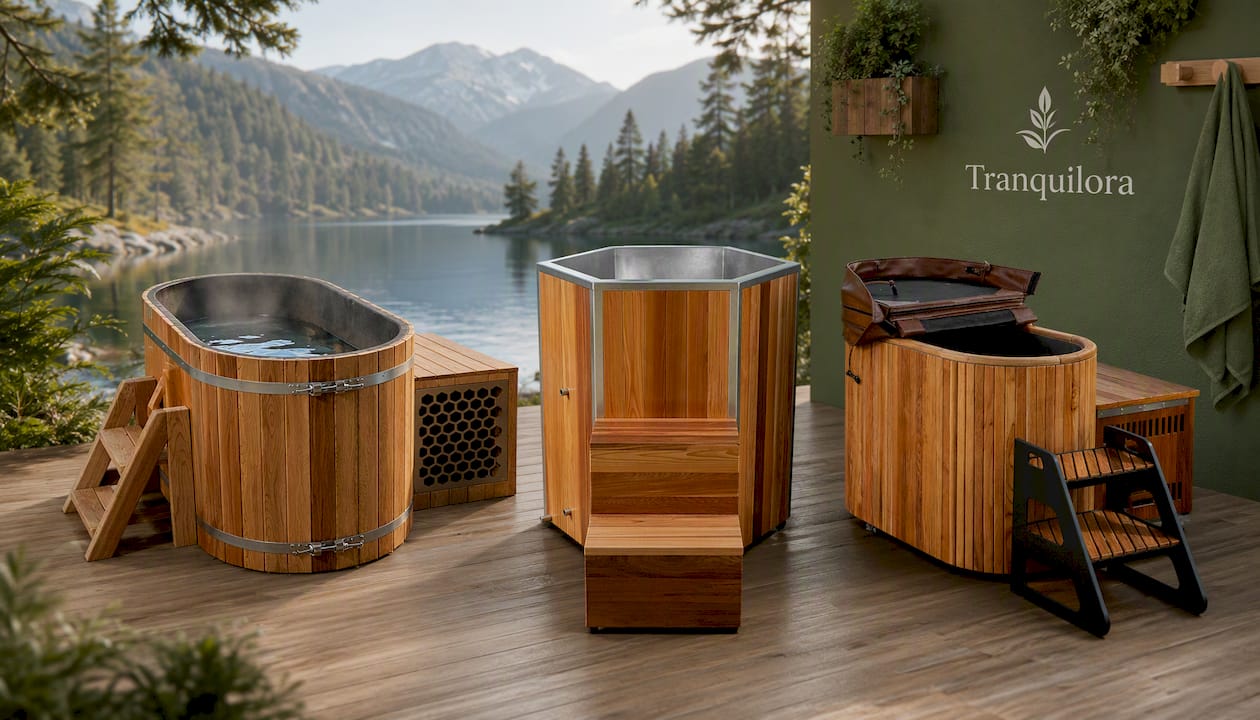
For the cold side of the routine, Tranquilora carries three cedar cold plunge models built for home use: the Svalvik Cedar Ice Bath, the Isvik Cedar Ice Bath, and the Aurland Cedar Ice Bath, each offering a different footprint and capacity depending on your space and how many rounds you plan to run per session. Pair any of them with a unit from the infrared sauna collection or browse the full saunas and cold plunge collection to see heat and cold options side by side. If you’re weighing sizing or installation questions for your specific space, the at-home sauna buying guide is a solid next stop before you choose.
This article is general information, not a substitute for advice from a qualified doctor. Consult a qualified healthcare professional about your own circumstances before acting on anything here.
Sources
- Heat therapy: mechanistic underpinnings and applications to cardiovascular health - PMC
- Thermal stress: an untapped potential in rehabilitation? An opinion paper on Finnish sauna and whole-body cryostimulation | Frontiers
- Effects of contrast therapy on autonomic nervous system — J-STAGE
- Cold plunge after workouts — Mayo Clinic Health System
FAQ
In What Order Should You Do Sauna and Cold Plunge?
Sauna first, cold plunge second. Heat opens blood vessels and relaxes muscles, and finishing with cold water triggers the norepinephrine and alertness response most people are seeking, along with the parasympathetic recovery shift that follows sessions ending in cold.
How Often Should You Do a Sauna and Cold Plunge Routine?
Most protocols target 3 to 4 sessions per week, working toward a weekly benchmark of roughly 57 minutes of heat and 11 minutes of cold exposure. Beginners should start with 2 sessions weekly and build gradually over 4 to 6 weeks rather than jumping straight to the full target.
What Is the 200 Rule for Saunas?
Definitions of informal rules vary across sources, and there’s no single peer-reviewed standard behind them. Rather than chase an informal number, use the temperature and duration ranges in this guide, such as 10 to 15 minutes at 150 to 170°F for traditional sauna, and adjust based on your own tolerance.
Is It Good to Combine Sauna and Cold Plunge?
For most healthy adults, combining the two is well tolerated and may support cardiovascular conditioning, post-exercise soreness reduction, and autonomic balance. People with unstable heart conditions, uncontrolled blood pressure, or a history of fainting should check with a doctor before starting, since combined heat and cold exposure is a real cardiovascular stressor, not a passive relaxation activity.
Recommended
- Heat Therapy & Saunas for Home Wellness
- Cold Plunge Therapy Benefits & Safety Guide
- Portable Saunas
- Home Sauna Types Compared for Everyday Use
This article is for general informational and educational purposes only and is not medical advice. Consult a qualified healthcare professional regarding health conditions or before making significant changes to your wellness routine.