

Physiologically, a cold plunge and an ice bath are the same therapy: both submerge your body in cold water and trigger the same autonomic, endocrine, and thermoregulatory response once temperature and duration match. The real choice comes down to habitability. An ice bath suits occasional, low-cost use, while a chiller-equipped cold plunge suits people who want consistency three or more times a week. Anyone with cardiovascular concerns should talk to a clinician before either one.
TL;DR:
- A cold plunge offers consistent water temperature control, making it easier to replicate research protocols than an ice bath, which relies on melting ice.
- Maintaining precise temperatures and stable conditions is especially important for those aiming to maximize short-term recovery benefits.
- Regular use of a chiller-equipped cold plunge reduces prep time and ongoing costs compared to frequent ice bath setups, which require continuous ice purchases.
- Current evidence supports short-term benefits such as reduced soreness and inflammation, but long-term mood or immunity improvements are unproven.
- Cardiovascular risks mean individuals with heart concerns should consult a healthcare professional before starting cold water immersion routines.
Table of Contents
- Cold Plunge vs Ice Bath: What Actually Separates Them
- Cold Plunge or Ice Bath: The Practical Trade-Offs
- What the Research Says About Cold Plunge and Ice Bath Benefits
- Is a Cold Plunge Safe? Precautions Everyone Should Know
- How to Choose Between a Cold Plunge and an Ice Bath
- Building a Sustainable Home Cold Immersion Routine
- Where Cold Plunging and Ice Bathing Actually Came From
- Compare Tranquilora’s Cedar Ice Bath Models
- Sources
- FAQ
Cold Plunge vs Ice Bath: What Actually Separates Them
The difference between a cold plunge and an ice bath is mostly about equipment, not physiology. A cold plunge is a tub with a built-in chiller that holds water at a set temperature indefinitely. An ice bath is any vessel, often a stock tank or tub, that is filled with cold water and bags of ice to bring the temperature down manually.
Both fall under the umbrella term cold water immersion (CWI), which is the term you will see in most clinical research. This distinction matters because studies rarely say “cold plunge” or “ice bath.” They report a water temperature and an immersion time, and your results depend on matching those numbers rather than the brand of tub you use.
In practice, most home users land somewhere in these ranges:
- Temperature: roughly 50 to 59°F (10 to 15°C) for general recovery use, with some experienced users going down to 39°F (4°C).
- Duration: most protocols in the research run about 10 to 15 minutes, though many people start with sessions as short as 30 seconds to two minutes.
- Frequency: studies vary widely, from single post-exercise sessions to daily use over several weeks.
Ice baths tend to drift a few degrees warmer as the ice melts during a session, while a chiller holds a steady number the entire time. That precision is not just a comfort issue. It is what lets you replicate a specific research protocol session after session, instead of guessing.
Cold Plunge or Ice Bath: The Practical Trade-Offs
Once you get past the physiology, the decision usually comes down to five practical factors: temperature precision, prep time, cost, hygiene, and how much space and power you can dedicate to it.
Temperature control is a key technical advantage for a cold plunge, maintaining water temperature consistently near the target throughout sessions. An ice bath depends on how much ice you buy and how fast it melts, so the water at minute one is colder than the water at minute ten.
Prep and session time differs, with a cold plunge typically ready quickly once installed. An ice bath usually needs 15 to 25 minutes of setup per session: filling the tub, hauling and dumping ice, and checking the temperature before you get in.
Cost profiles vary; ice baths have lower initial costs but ongoing ice expenses that can increase with frequent use. A cold plunge costs more to buy but runs mostly on electricity, and readers curious about typical running costs for chiller-based equipment can look at how utility costs scale for similar heated or chilled water systems for a sense of the math.
Maintenance differs just as much. Chiller-equipped systems generally need periodic filter changes and ozone or UV sanitation cycles, and the water can stay usable for weeks. A DIY ice bath usually gets drained and refilled after every session, which is more labor but less equipment to maintain.
| Factor | Cold Plunge | Ice Bath |
|---|---|---|
| Temperature range | Consistent, set point | Drifts as ice melts |
| Recommended duration | 10 to 15 minutes | 10 to 15 minutes |
| Cost and ongoing expense | Higher upfront, electricity to run | Lower upfront, recurring ice cost |
| Convenience/prep time | Seconds | 15 to 25 minutes |
| Hygiene & maintenance | Filters, sanitation cycles | Drain and refill each use |
Pro Tip: If noise or breaker capacity is a concern in your home, ask about a chiller’s decibel rating and amperage draw before you buy. Some units need a dedicated circuit, similar to a window air conditioner.
What the Research Says About Cold Plunge and Ice Bath Benefits
The evidence for cold water immersion is real but narrower than most marketing suggests. Reviews consistently point to short-term effects: reduced perceived soreness, some easing of inflammation markers, and a temporary calming effect on the nervous system after intense exercise.
The mechanism behind this is fairly well understood. Cold exposure causes vasoconstriction, a spike in norepinephrine, and a broader autonomic stress response that can blunt the sensation of delayed onset muscle soreness in the hours after training.
A 2025 systematic review of 11 studies found significant reductions in stress markers 12 hours after cold water immersion, but no consistent long-term immune or mood effects across the studies reviewed. That is a meaningful gap: the acute recovery benefit shows up reliably, while claims about lasting changes to mood or immunity do not hold up as well across the research.
Separately, meta-analyses of trials using protocols in the 10 to 15 minute range at roughly 11 to 15°C report reduced soreness and improved recovery markers at the 24 hour mark, though results vary by exercise type and environmental conditions.
Two limitations show up across nearly every study in this space:
- Sample sizes are usually small, often a few dozen participants at most.
- Protocols vary enough between studies (different temperatures, durations, and exercise types) that direct comparisons are difficult.
If you want the research-backed effects, the practical takeaway is to match your session to what the trials actually used: cold enough, long enough, consistently enough. A single unusually cold plunge does not substitute for a repeatable routine.
Is a Cold Plunge Safe? Precautions Everyone Should Know
Cold water immersion is not risk-free, and the biggest concern is cardiovascular, not comfort. The initial cold shock response causes a rapid spike in heart rate and blood pressure through sympathetic nervous system activation. Anyone with high blood pressure, heart disease, or arrhythmias should talk to a clinician before trying cold immersion, whether it is an ice bath or a cold plunge.
Cold shock itself is dangerous even at temperatures many people consider mild. The National Weather Service’s cold water safety guidance notes that gasping reflexes and muscle incapacitation can occur even in the 50 to 60°F range, which is squarely within typical plunge territory.
A short list of precautions reduces most of that risk:
- Keep your head and neck out of the water at all times.
- Have someone else present for your first several sessions.
- Practice slow, controlled breathing before and during immersion rather than gasping.
- Start warmer and shorter, then progress gradually as your tolerance builds.
- Avoid cold immersion immediately after heavy resistance training if muscle growth is your primary goal, since some research suggests it may blunt hypertrophy signaling.
- Set up on a non-slip surface with a clear, quick exit path.
Clinical guidance from MD Anderson recommends beginners start with brief exposures of 30 seconds to a few minutes and avoid going below roughly 50°F until they have built up tolerance.
Pro Tip: Keep warm clothing and a towel within arm’s reach before you get in, not after. Fumbling for a robe while shivering is when small accidents happen.
How to Choose Between a Cold Plunge and an Ice Bath
Four questions narrow the decision quickly: how often will you actually use it, what is your budget, do you want precise temperature control, and how much space do you have for setup and drainage.
- Frequency under three times a week: an ice bath is usually the more sensible starting point, since the recurring ice cost stays manageable at low volume.
- Frequency of three or more sessions weekly: a chiller-equipped cold plunge tends to pay for itself in saved time and ice costs, and it removes the friction that causes people to quit.
- Uncertain which camp you’re in: run a four to six week ice bath trial before committing to equipment. If you are still showing up consistently at week six, that is a strong signal a dedicated system is worth the investment.
A simple starter protocol for beginners:
- Begin at 60°F for 30 to 60 seconds, focused entirely on steady breathing.
- Add 30 seconds per session over two to three weeks as tolerance builds.
- Progress toward 50 to 59°F for 5 to 10 minutes once you are comfortable.
- Reassess with a clinician before going colder or longer if you have any cardiovascular risk factors.
Convenience and consistency matter more for long-term results than shaving a degree or two off your coldest session. A chiller-equipped plunge’s steady temperature and low prep time are often what keeps people showing up, which counts for more over months than a single extra-cold DIY session ever will.
Building a Sustainable Home Cold Immersion Routine
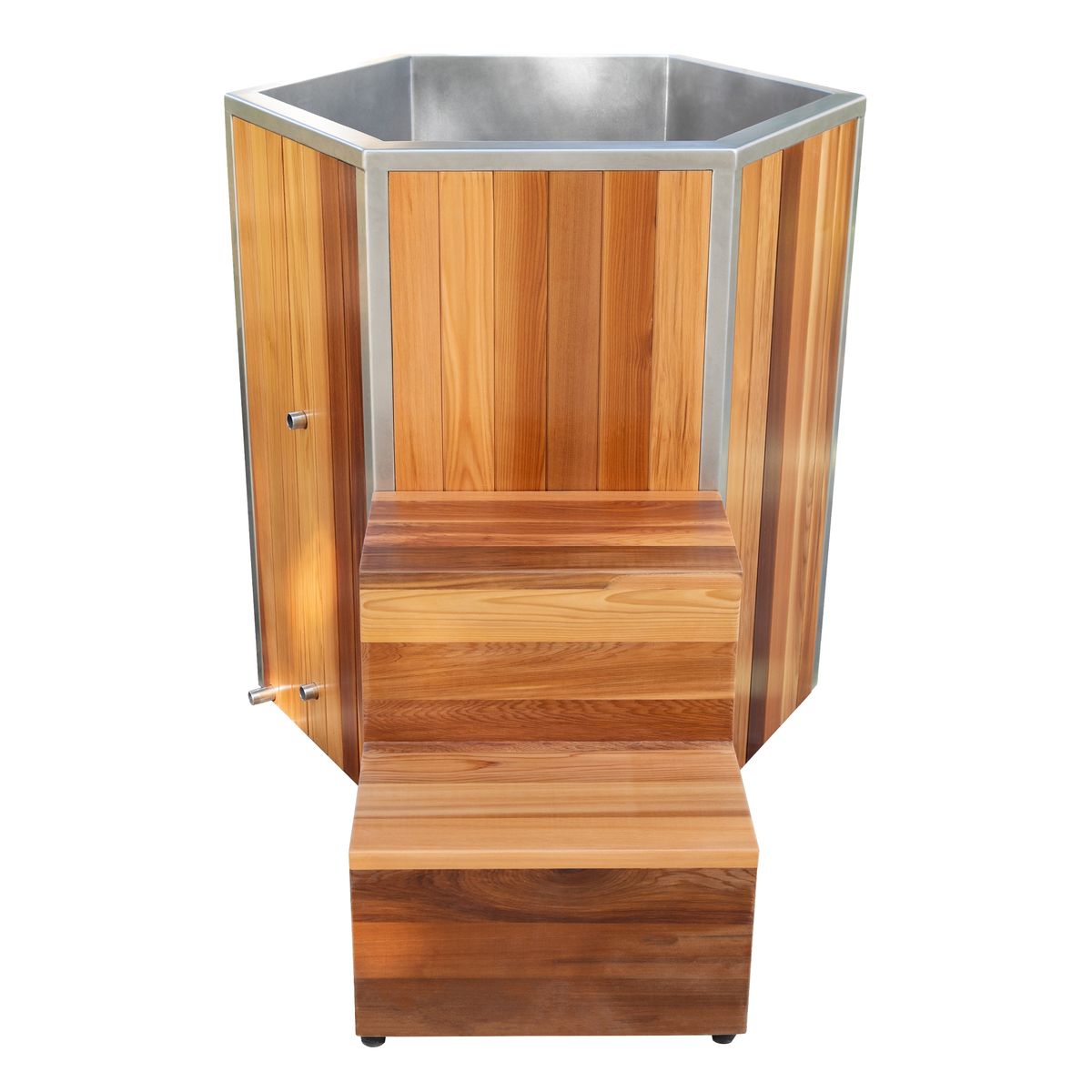
The biggest barrier to a consistent cold immersion habit is not motivation. It is friction: hauling ice, guessing at temperature, and cleaning a tub after every single use. Purpose-built cedar ice bath systems address that friction directly by holding a set temperature and simplifying the sanitation cycle, so the routine is ready when you are instead of requiring a grocery run first.
If you are weighing installation questions, Tranquilora’s guide to choosing a home cold plunge tub covers sizing, power needs, and placement. For safety fundamentals before your first session, the cold plunge therapy benefits and safety guide walks through cold shock response and supervised protocols in more depth.
Among home systems, three cedar models illustrate what a dedicated setup looks like in practice:
- Isvik Cedar Ice Bath, built for homeowners who want a low-maintenance, steady-temperature plunge.
- Svalvik Cedar Ice Bath, a durable option suited to frequent, aesthetic home installations.
- Aurland Cedar Ice Bath, another cedar option built for regular residential use.
None of these are described as treating any medical condition. They are equipment choices for people who have decided cold immersion fits their routine. Questions about chiller sizing, power draw, or installation are best directed to product pages or Tranquilora’s support team directly.
Where Cold Plunging and Ice Bathing Actually Came From
Cold water immersion is not a modern biohacking invention. Ancient Greek and Roman bathhouses included a frigidarium, a cold plunge pool used after the hot rooms as part of a broader bathing ritual tied to health and social life. Scandinavian and Nordic cultures have long paired sauna heat with plunges into cold lakes or the sea, a practice that predates any wellness marketing by centuries.
Japanese misogi, a Shinto purification ritual involving cold waterfalls or rivers, connects cold exposure to spiritual practice rather than athletic recovery. Traditional Finnish sauna culture treats the hot and cold cycle as a single practice, not two separate activities, which is part of why sauna and cold plunge are so often paired in modern home wellness setups today.
The athletic recovery angle is much newer. Ice baths became common in professional sports training rooms in the latter half of the twentieth century, largely on the strength of anecdotal reports from athletes and trainers rather than clinical trials. The chiller-equipped cold plunge, as a consumer product, is newer still, emerging alongside the broader at-home wellness equipment market over the past decade or so.
What connects the ancient frigidarium to a modern cedar tub is the same basic principle: cold water immersion, repeated with some consistency, as part of a larger self-care routine rather than a one-off stunt.
Compare Tranquilora’s Cedar Ice Bath Models
Dedicated cedar ice bath and cold plunge systems built specifically for regular home use are an alternative to improvised bucket-and-ice-bag setups many people start with.
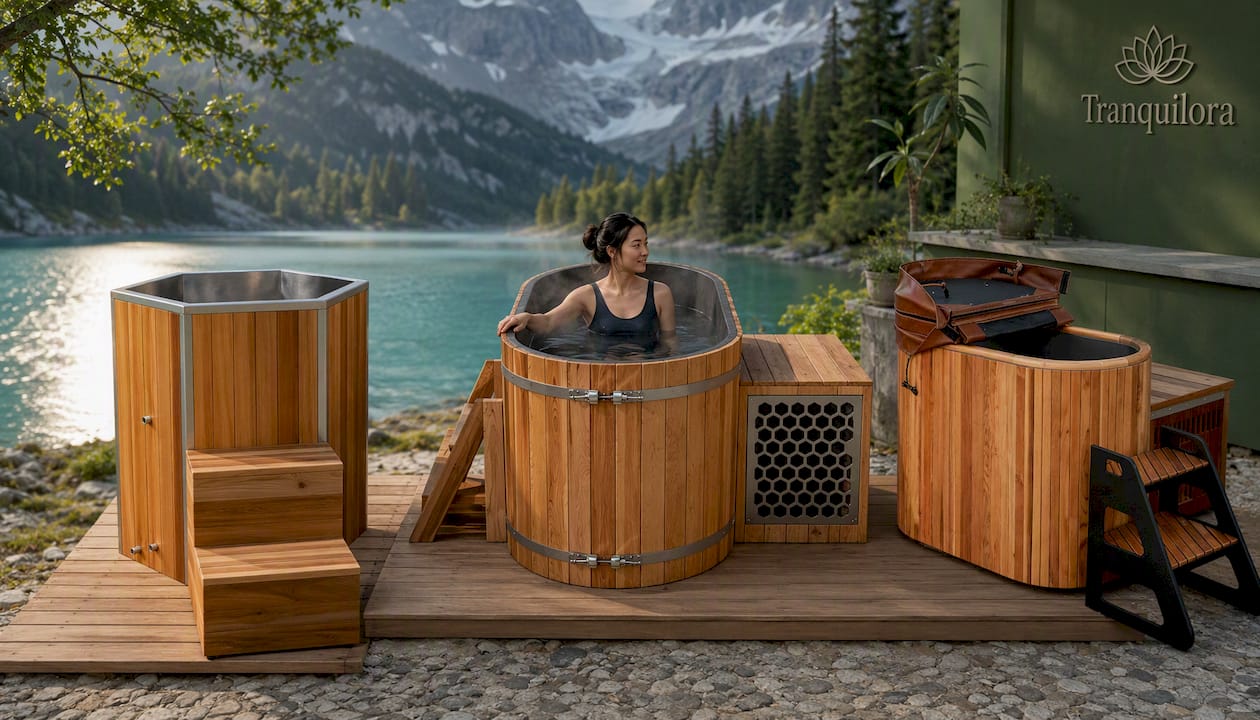
The lineup includes three models worth comparing side by side. The Isvik Cedar Ice Bath suits homeowners who want a straightforward, low-maintenance option for frequent sessions. The Svalvik Cedar Ice Bath offers a durable build for people who plan to use it often and want it to hold up over years, not months. The Aurland Cedar Ice Bath rounds out the range as another solid choice for regular residential installation. All three are built around the same idea this article has covered: consistent temperature and simpler sanitation make it far easier to stick with a routine than refilling a tank with bagged ice every time.
If you are also considering how cold immersion pairs with heat therapy, Tranquilora’s saunas and cold plunge collection brings both together. For sizing, power, or installation questions specific to your home, compare the models above or reach out to the Tranquilora team before you buy.
This article is general information, not a substitute for advice from a qualified doctor. Consult a qualified healthcare professional about your own circumstances before acting on anything here.
Sources
- What Science Reveals About Ice Baths and Cold Plunges for Muscle Recovery
- Cold plunges: Healthy or harmful for your heart? (Harvard Health)
- Systematic review (2025) on cold water immersion outcomes
- Meta-analyses and reviews of cold water immersion effects (PMC review)
- Should you try a cold plunge? (MD Anderson)
FAQ
What Does Three Minutes in an Ice Bath Actually Do?
A three-minute session at a typical range of 50 to 59°F triggers vasoconstriction and a burst of norepinephrine, which is linked to short-term reductions in perceived soreness. The 2025 systematic review found measurable stress-marker reductions around 12 hours after a single session, though effects on mood or immunity were not consistent across studies.
What Happens After 30 Days of Regular Ice Baths?
Research on cold water immersion generally covers single sessions or short trial periods rather than a full 30-day protocol, so a specific 30-day outcome is not well established in the literature. What the evidence does support is that consistent sessions matching a research-backed temperature and duration produce more reliable short-term recovery benefits than occasional, inconsistent use.
Can a Cold Shower Replace an Ice Bath?
A cold shower is not a full substitute because most home showers cannot reach or hold the lower temperatures used in research protocols, and water contact is limited to the surface area under the stream rather than full-body immersion. A cold shower can still offer a milder version of the same autonomic response, just at a smaller scale than an ice bath or cold plunge.
Is a Cold Plunge Worth the Investment Compared to an Ice Bath?
It depends on how often you plan to use it. If you expect to plunge three or more times a week, a chiller-equipped system typically saves time and recurring ice costs, while occasional users often get similar physiological benefits from a properly chilled DIY ice bath at a fraction of the upfront cost.
What Is the Best Temperature for an Ice Bath?
Most home protocols fall between 50 and 59°F (10 to 15°C), with some experienced users going as low as 39°F (4°C). Beginners should start closer to 60°F for short exposures of 30 to 60 seconds before progressing to colder or longer sessions, per MD Anderson’s clinical guidance.
Recommended
- Cold Plunge Therapy Benefits & Safety Guide
- How to Choose a Cold Plunge Tub for Home
- Massage Therapy
- Heat Therapy & Saunas for Home Wellness
This article is for general informational and educational purposes only and is not medical advice. Consult a qualified healthcare professional regarding health conditions or before making significant changes to your wellness routine.